
Tags
Antonio Rey, Ballet Flamenco de Andalucía, El Farru, El Perrete, Esther Merino, Eva la Yerbabuena, Jesús Carmona, Juan Tomás de la Molía, María Moreno, María Pagés, Marco Flores, Olga Pericet, Patricia Guerrero, Rafael Riqueni, Rocío Molina, Sabicas
Flamenco Festival London 2026
The heatwave in London brought joking comments about the title of Rocío Molina’s masterpiece Calentamiento – Warming-Up at Sadler’s Wells Theatre, on Wednesday 24 June 2026. None of us felt the need to warm-up but we were soon arrested by Rocío Molina’s focus: she was already on stage – warming-up to very loud, up tempo piped music – as we slowly took our seats in the auditorium.
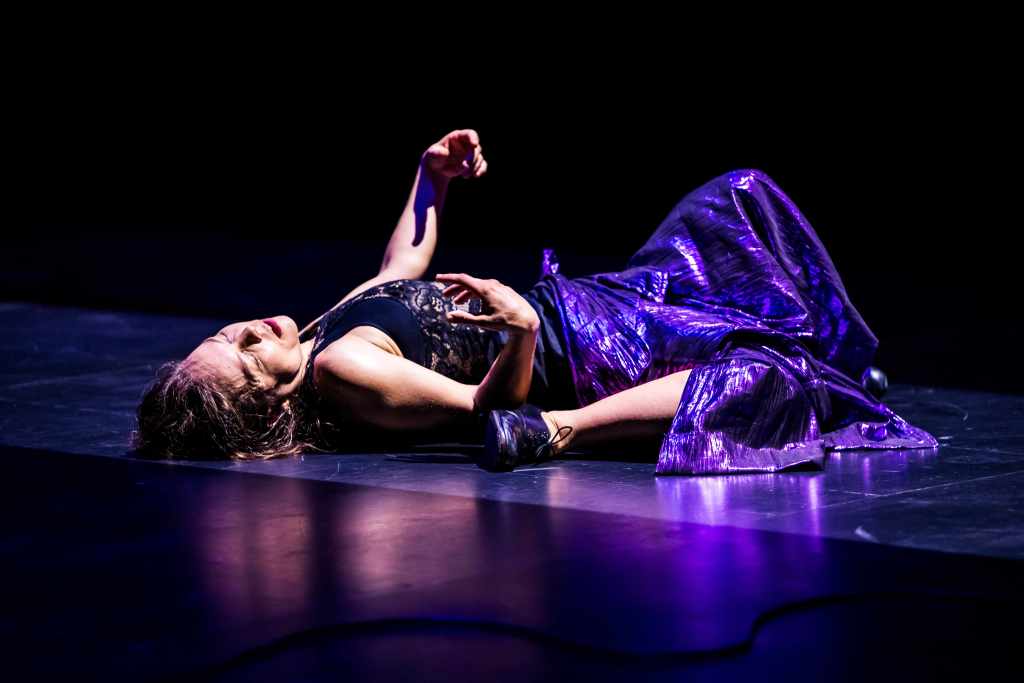
Rocío Molina in Calentamientos © Simone Fratini
We watched her as she went through her various exercises, warming-up various muscles, stretching, her concentration was not broken by the arrival of the audience, she continued to warm-up and we continued to watch. After quite some time, the house lights went down, the music stopped, and she came to the front of the stage and started her warm-up with footwork and she talked to us as she did so, explaining what she was doing and why she was doing it. She talked of the importance of warming-up, of beginnings, of restarting, of continuation, of not really ending, of preparation. She recounted the words of encouragement from her mother from when she was a young girl, on doing a 35-minute work-out– not 25 minutes, not 30 minutes, but 35 minutes – un ratito más (just a little bit more) her mother would cajole; focus on your shoulders and keep your head up. She spoke of moving beyond the muscular pain into a zone of freedom of expression.
Through the relentlessness of her warming-up and of her talking us through it all, we started to appreciate the dedication that went into establishing and maintaining a performance career. This was all about establishing the technique in order to create her artistic expression.
In any performance by Rocío Molina, one always has an expectation of not only of watching her artistry as a dancer but also of being challenged intellectually; she somehow leads you to question and re-evaluate the way you look at the world, while you are absorbed in her dancing.

In the ongoing discussion, she describes working her feet at different metronome speeds: she specifies the metronome speed such 140 bpm and her feet follow that speed! We definitely knew that she had a solid sense of beat, pulse and rhythm but in this non-stop performance, we didn’t expect a full drum kit to be rolled onto the stage and for Rocío Molina to go full pelt into a long drum improvisation! Wow! It was amazing.
The singers crowded into that small telephone booth shape, along with two stacks of chairs, were released occasionally to sing and each with a different timbre and flamenco style: Ana Polanca, Ana Salazar, Maria del Tango and Gara Hernández – and outside of the box, José Manuel Ramos ‘Oruco’.

This non-stop performance and pre-performance had gone on for two hours and just we we wondered how much more a human being could endure? Still more was piled on Rocío Molina chair by chair we wondered – and worried – would she collapse? How would she break free from this entanglement of chairs? But Rocío Molina must be superhuman! She artistically extracts herself from this burden, again, chair by chair, not endangering anyone around her (or the audience) as she thrust the chairs across the stage. As an audience, we were torn between feeling all that she was going through and worrying that she would not survive. That is the mastery of Rocío Molina in absolutely engaging her audience.
In Rocío Molina’s own words:
Calentamiento is a representation of slow combustion. It is sweat, breath, celebration, absence, love and, above all, liberation: the liberation of perceiving tiredness as a state of pleasure. As my body ignites, a powerful, tectonic force rises from its inner darkness and from the ground itself, holding me tight to the Earth so I can launch myself.
We wondered how this performance would end, but IT DID NOT END! Rocío Molina continued to dance and the audience was ushered out, against their will in many cases, so that the performance had no end and no beginning… which was what Rocío Molina was trying to convey to us. Coming out of the auditorium was difficult but staying meant she would continue to dance. Rocío Molina had shared with us an intimate part of her everyday life as a performer and it was so moving and so unforgettable. It was what live performance is all about.
Flamenco Festival London 2026 continues with:
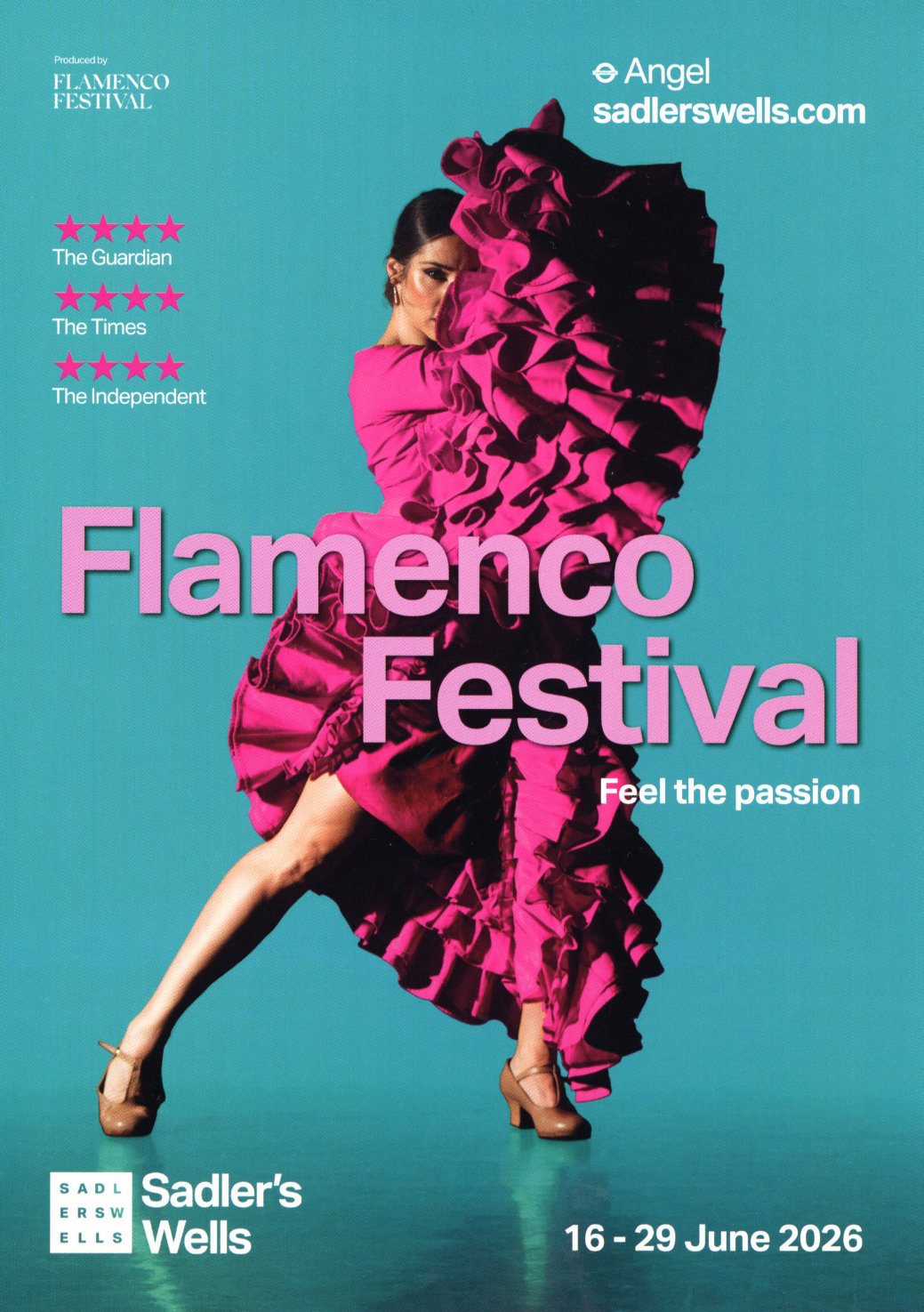
Night of the Guitar with guitarists Gerardo Núñez, Antonio Rey, and Álvaro Martinete, and dancer Olga Pericet in a Tribute to Sabicas at Sadler’s Wells on Thursday 25 June 2026, 7.30pm. Tickets.
Ballet Flamenco de Andalucía presents Tierra Bendita at Sadler’s Wells Friday 26 June 2026, 7.30pm and Saturday 27 June 2026, 3pm and 7.30pm. Tickets
Compañía María Moreno presents the UK Première of Magnificat at Sadler’s Wells East Sunday 28 June 2026, 7.30pm. Tickets
Compañía Marco Flores presents Rayuela at Sadler’s Wells East Monday 29 June 2026, 7.30pm. Tickets
Flamenco Festival London 2026
for full programme: Flamenco Festival London 2026
Flamenco Festival London 2026 with Director Miguel Marín, is at Sadler’s Wells Theatre, Rosebery Ave, Clerkenwell, London EC1R 4TN. Tel. 020 7863 8000, sadlerswells.com.
Copyright©2026 Thérèse Wassily Saba

